
self-editing
The long process of self-editing
With or without professional editors, all writers undergo the self-editing procedure before releasing their books to the reading world. Read, reassess, and read again is the only rule, even if one decides to address their literary work to editors. It is known that editing is not without cost—what is in this life, anyway?
Therefore, self-editing could be the obvious choice for some writers.
Thankfully, there are plenty of handy tools to do the job, some better than others, if I may say so. Google for the most suitable application depending on your needs. Although I use both Grammarly (free plan) and ProWritingAid (premium version), the latter is undeniably powerful. Analytic, with comprehensive story critiques, sensory reports, style improvements, and numerous other suggestions, makes it more than a grammar checker.
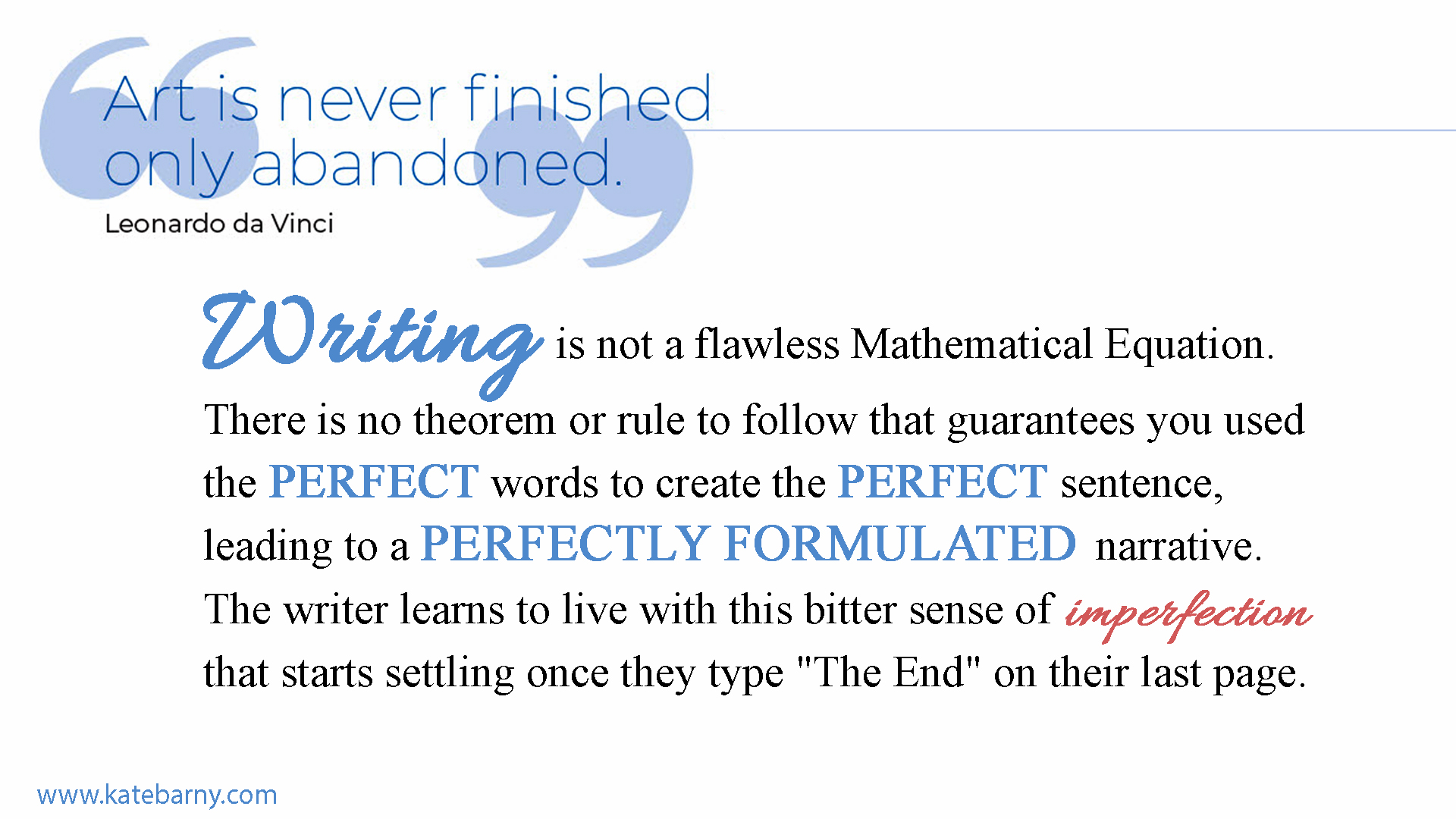
The rule of thumb in self-editing is to READ your novel, even aloud, again and again. Then put it aside for a while—several days or weeks—and then … well, read it once more!!! Revising your storytelling may take longer than crafting it, but nobody said writing a book isn’t time-consuming.
It tells you where you need to go and when in chronological order.
2. An editor won't make your story better or more consistent.
Only you can do that.
3. If your idea is not exciting, after editing, it will be modified.
However, it won't necessarily be more exciting.
I found the following article in the Killer Nashville Magazine the other day, and I couldn’t resist sharing an excerpt.
The decision creates a challenging dilemma … or not.
We Don’t Need Editors, Do We?
by Philip Demetry
“If you do a quick Google search on the benefits and costs of self-publishing versus a traditional route, you will most likely find one blog post after the other, one website after the other, claiming that self-publishing is the way to go. How many of those are in some form inserted into your feed by Amazon, no one can truly tell, but it would be foolish not to suspect the multi-billion-dollar corporation of consciously making their presence felt in the publishing industry. In fact, quite a lot of statistics are backing that claim up.
Some claim that the sea of digital self-publishing, having made publishing accessible regardless of quality, is causing traditional publishing houses to crumble. Indeed, this has been the case for some. Small publishers have drowned while larger ones have merged to form even greater giants to withstand the pressure. But will it work?
[…] It becomes then a philosophical question. The author must ask of themselves: “Why do I write? For whom am I writing?”
It might be possible, at the end of your questioning, to arrive at the conclusion that you write primarily for your own benefit, that writing is an exercise in introspection at the end of which a story will emerge expressing that introspection in a way others might relate to. Yet, upon completing this goal a need will arise to share what you have created. It is within this spectrum between one’s personal joy of writing for the sake of writing, and a need to share stories with others, that a writer must find their peace.
[…] A writer is nothing more or less than a storyteller. We do not concern ourselves with marketing, finance, or strategy in conceiving of our stories.
Motivations then, concerning fame, influence, and wealth will never enhance our chances of getting published successfully. The only thing that lies within our power is the ability to improve our writing. Train your writing skills.
[…] How much value is in the editorial process, which for a traditional publishing house usually takes a year or more? Can your story compete without it?”
Click here to read the entire, inspirational, and fascinating article in Killer Nashville Magazine.